_1765581354215-B3gV1V2H.png)
Understanding Stroke Types: What Every Woman Should Know
By Angie Read, Founder of Stroke Sisters and Two-Time Stroke Survivor
Before I had a stroke, I knew what a stroke was. Or at least I thought I did.
I knew it involved the brain. I knew it was serious. I knew some warning signs. What I didn’t understand was how many ways a stroke can happen, why knowing the type matters or how doctors determine what caused it.
After becoming a two-time stroke survivor, I’ve learned far more about stroke than I ever expected. One of the first things every survivor and family should understand is: Not all strokes are the same.
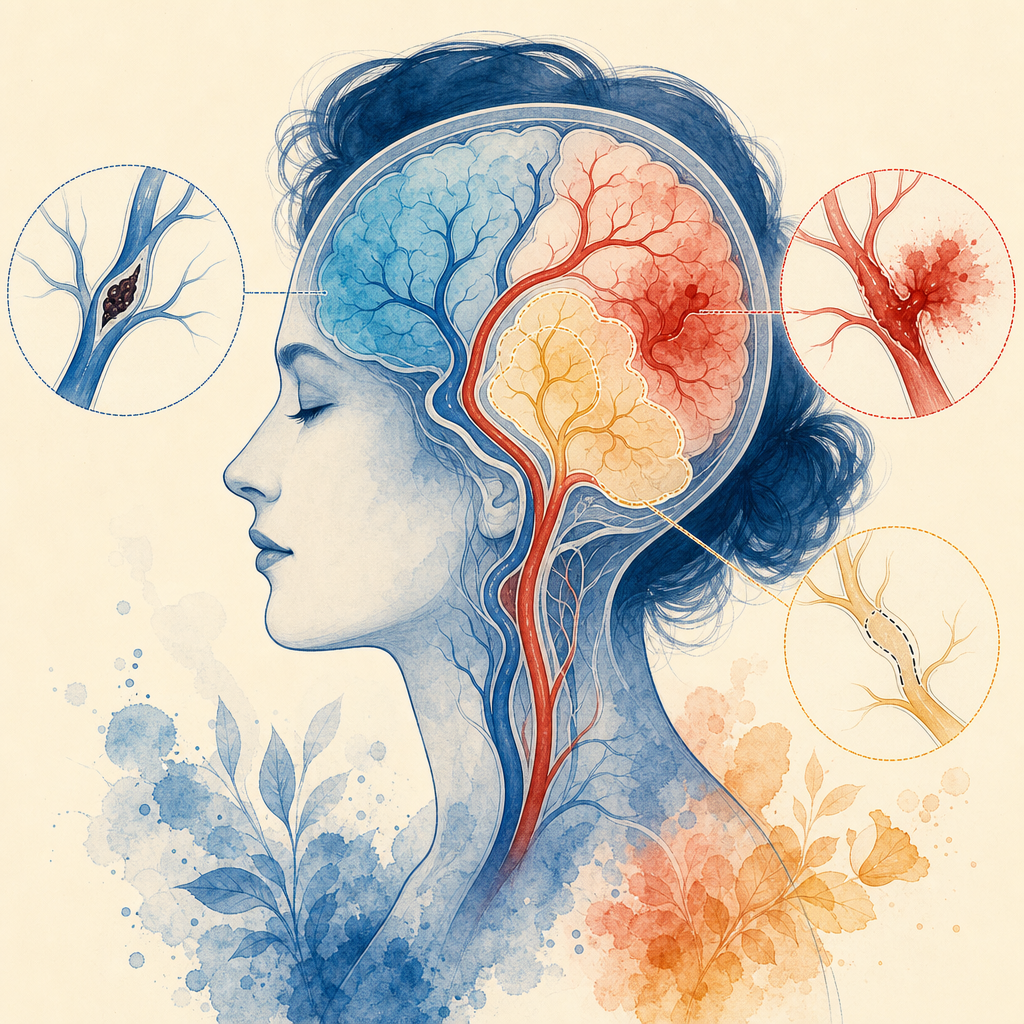
The two major types are ischemic stroke, caused by blocked blood flow to the brain, and hemorrhagic stroke, caused by bleeding from a ruptured or leaking blood vessel. There’s also a transient ischemic attack (TIA), or warning stroke, in which blood flow is temporarily blocked.
Symptoms can look similar, but what happens inside the brain differs. That affects emergency treatment, prevention and sometimes recovery.
What Happens During a Stroke?
Your brain needs a constant supply of oxygen-rich blood. A stroke occurs when that supply is interrupted because a blood vessel becomes blocked or ruptures. Without enough oxygen, brain cells can begin to die within minutes.
That’s why stroke is an emergency. It isn’t something to sleep off, monitor overnight or Google for an hour. If someone suddenly develops possible stroke symptoms, call 911 immediately.
Ischemic Stroke: A Blockage
Ischemic stroke is by far the most common type. The American Stroke Association explains ischemic stroke and reports that approximately 87% of strokes are ischemic.
An ischemic stroke occurs when a blood vessel supplying the brain becomes obstructed, depriving brain tissue of oxygen. My first stroke was ischemic. Doctors performed a thrombectomy and removed two clots. I was incredibly fortunate to receive treatment quickly, and that speed made an enormous difference in my outcome.
Thrombotic Stroke
A clot can form in an artery supplying the brain, often in an area affected by atherosclerosis—the buildup of fatty deposits or plaque inside blood vessels. This is called cerebral thrombosis.
Embolic Stroke
A clot can form elsewhere in the body, break loose and travel until it becomes lodged in a vessel supplying the brain. This is called cerebral embolism.
One possible source is the heart. Atrial fibrillation, or AFib, is an irregular heart rhythm that can allow clots to form in the heart and travel to the brain. That’s one reason some survivors undergo heart monitoring and cardiac testing.
How Is an Ischemic Stroke Treated?
Treatment depends on many factors, including when symptoms began, imaging findings, blockage location and the patient’s circumstances. Eligible patients may receive medication to dissolve a clot and restore blood flow. Some people with certain large-vessel blockages may be candidates for mechanical thrombectomy, a catheter-based procedure that physically removes the clot. That was the treatment I received.
The important thing for survivors isn’t deciding which treatment they should receive. That’s a medical decision. It’s understanding why getting to the hospital quickly matters so much. Stroke teams need time to determine the stroke type and whether specific treatments are appropriate.
Hemorrhagic Stroke: Bleeding in or Around the Brain
A hemorrhagic stroke is different. A blood vessel ruptures or leaks, and blood collects in or around the brain, damaging tissue and potentially increasing pressure. The American Stroke Association’s hemorrhagic stroke guide reports that these account for about 13% of strokes.
Intracerebral Hemorrhage
An intracerebral hemorrhage (ICH) occurs when a vessel ruptures and bleeds directly into brain tissue. Long-term high blood pressure is an important cause. An arteriovenous malformation, or AVM, can also cause bleeding.
Subarachnoid Hemorrhage
A subarachnoid hemorrhage (SAH) occurs when bleeding develops between the brain and the tissue covering it. One possible cause is a ruptured brain aneurysm—a weakened area in a blood-vessel wall that balloons outward and can rupture.
It may cause a sudden, extremely severe headache. But symptoms vary, so don’t try to determine the stroke type yourself based on symptoms.
Why Doctors Have to Know Which Type You’re Having
A blockage and a brain bleed cannot automatically be treated the same way. Medication intended to dissolve an ischemic clot would not be appropriate for a hemorrhagic stroke and could worsen bleeding.
That’s one reason brain imaging is so important. Doctors may use a CT scan, MRI and other tests to look for bleeding, blockage or another cause. Your job isn’t to identify the type. Your job is to recognize the warning signs and call 911.
What Is a TIA?
A transient ischemic attack, or TIA, happens when blood flow to the brain is temporarily blocked. You may have heard “mini-stroke.” I prefer warning stroke, because “mini” can sound harmless. It isn’t.
The American Stroke Association’s TIA guidance explains that symptoms can be the same as stroke symptoms but resolve, often after only minutes.
When symptoms begin, you can’t know whether it’s a TIA or a full stroke. Disappearing symptoms don’t mean you should ignore what happened. A TIA can warn of significant future stroke risk and needs urgent medical evaluation. If symptoms disappear before the ambulance arrives, you still need to be evaluated.
What Is a Cryptogenic Stroke?
Sometimes extensive testing doesn’t reveal a definite cause. That’s known as a cryptogenic stroke. This can be incredibly frustrating. After surviving something so serious, naturally you want to know: Why did this happen to me?
The workup may include brain and blood-vessel imaging, blood tests, heart testing and sometimes longer-term heart monitoring. If your stroke was called cryptogenic, ask your neurologist what testing was completed, whether more testing may be appropriate and what prevention plan they recommend.
What About an AVM?
An arteriovenous malformation (AVM) is an abnormal tangle of blood vessels connecting arteries and veins. AVMs aren’t a separate stroke type, but a brain AVM can rupture and cause a hemorrhagic stroke.
Survivors may understandably describe an “AVM stroke,” “aneurysm stroke” or “AFib-related stroke.” Those descriptions convey the cause, while the resulting stroke may still fall into the larger ischemic or hemorrhagic category.
Can Migraine Look Like Stroke?
Yes. Migraine with aura can cause neurological symptoms that resemble stroke, including visual disturbances, numbness or speech difficulties. Seizures and other conditions can also mimic stroke.
But never assume new neurological symptoms are “just a migraine,” especially when they are sudden or unusual for you. Emergency clinicians have imaging and other tools to distinguish possible causes. You don’t. When in doubt, get emergency help.
Do Women Experience Stroke Differently?
Women and men share the major classic warning signs, including sudden facial weakness, arm weakness, speech difficulty, vision problems, balance problems and severe headache. Women should know those signs and act immediately.
Women also have risk factors and life stages deserving specific attention. Pregnancy and postpartum, certain pregnancy complications and hormonal factors can influence risk in some women. Risk also changes with age and conditions such as high blood pressure, diabetes, smoking, high cholesterol and AFib.
Rather than memorizing every possible factor, discuss your individual stroke risk with a healthcare provider, especially after a stroke or TIA.
Know B.E. F.A.S.T.
- B – Balance: Sudden trouble with balance or coordination
- E – Eyes: Sudden vision changes
- F – Face: Facial drooping or numbness
- A – Arm: Arm weakness or numbness
- S – Speech: Slurred speech or difficulty speaking or understanding
- T – Time: Call 911 immediately
Don’t drive yourself if you think you’re having a stroke. Emergency medical services can begin assessment and alert the hospital. Don’t wait to see whether symptoms improve. Time matters.
Review our complete guide to recognizing stroke symptoms and acting quickly.
After a Stroke, Ask What Type You Had
It’s understandable to leave the hospital without absorbing everything. When you’re able, ask your medical team:
- Was my stroke ischemic or hemorrhagic?
- Where in my brain did it occur?
- Do you know what caused it?
- Was a clot involved?
- If it was cryptogenic, what causes have been ruled out?
- Do I need more heart or blood-vessel monitoring?
- What are my biggest risks for another stroke?
- What should I do to reduce those risks?
Understanding your stroke doesn’t change what happened. It can help you become a more informed participant in what happens next.
Your Stroke Type Doesn’t Predict Your Entire Recovery
Two people can have the same broad stroke type and completely different experiences. Effects depend on where the brain was injured, how much tissue was affected, how quickly treatment occurred and overall health.
One survivor may have weakness, another aphasia or vision changes, and another may walk and talk normally while living with fatigue, anxiety and cognitive changes nobody can see.
There isn’t one stroke experience. Understanding the type is important. Understanding your stroke is even more important.
Related Stroke Sisters Resources
- Signs of Stroke
- Stroke Recovery Timeline
- Fear of Another Stroke
- Driving After Stroke
- Invisible Effects of Stroke
- Post-Stroke Fatigue
Trusted Sources and Further Reading
- American Stroke Association: Types of Stroke
- American Stroke Association: Ischemic Stroke
- American Stroke Association: Hemorrhagic Stroke
- American Stroke Association: TIA
- CDC: About Stroke
About the Author
Angie Read is the Founder & CEO of Stroke Sisters and a two-time stroke survivor. She created Stroke Sisters to help women navigate the physical, mental and emotional realities of life after stroke. Angie brings lived experience and years of communications and patient-advocacy work to her writing. Her perspective reflects lived experience and research, not a medical credential.
Medical Disclaimer: Stroke Sisters is not a medical provider. Content is educational and supportive and is not a substitute for professional medical advice, diagnosis or treatment. Stroke and TIA symptoms are medical emergencies. Call 911 immediately, even if symptoms disappear, and do not drive yourself.