_1765581354215-B3gV1V2H.png)
Sensory Overload After Stroke: Why Noise, Light and Busy Places Can Feel Overwhelming
By Angie Read, Founder of Stroke Sisters
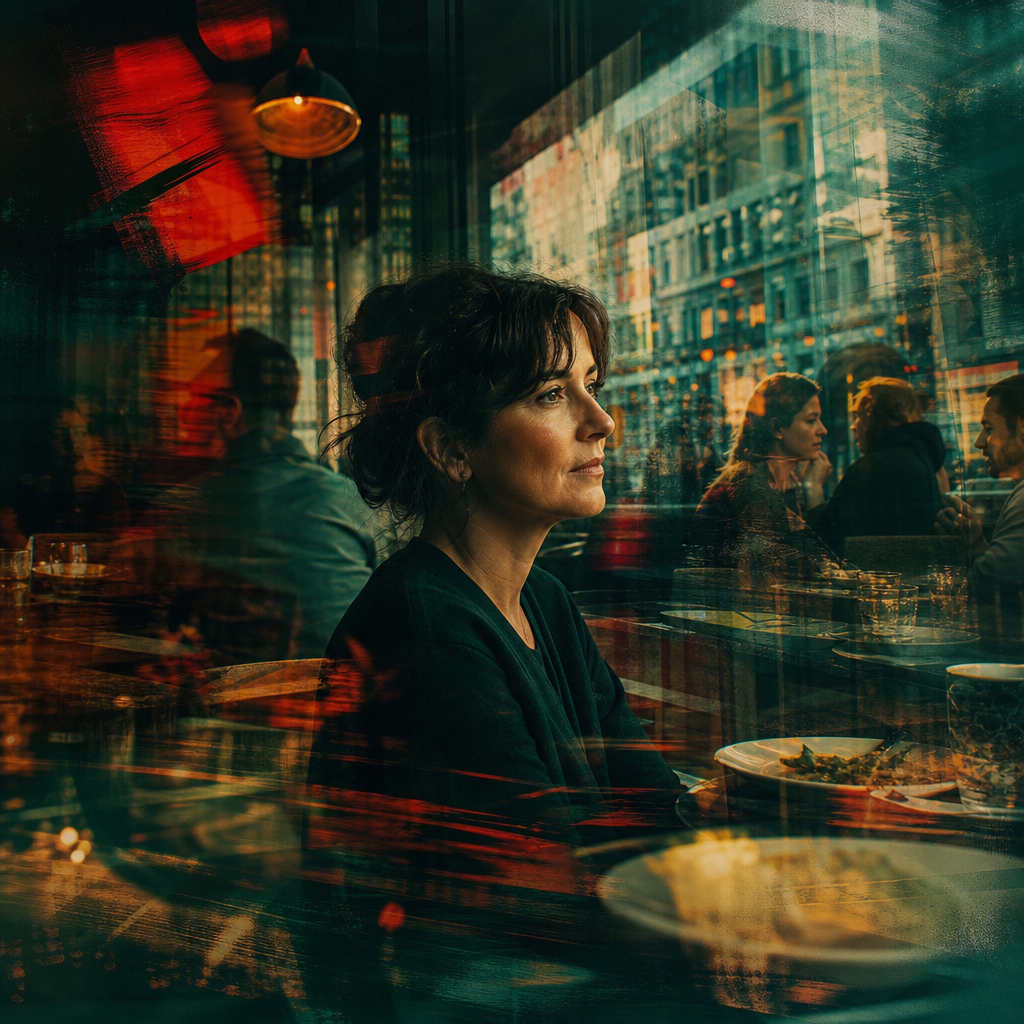
Have you ever walked into a busy restaurant after your stroke and suddenly felt like you needed to get out?
Music is playing. People are talking. Dishes are clattering. Someone asks a question. A TV is on in the background.
Before stroke, you might not have thought twice. Afterward, it can feel like everything is coming at your brain at once.
Women in Stroke Sisters often tell us noise feels louder, bright lights are harder to tolerate, crowded stores are exhausting and conversation in a busy room feels almost impossible. It is often called sensory overload or sensory hypersensitivity—and evidence shows sensory processing can change after stroke.
What Is Sensory Overload After Stroke?
Your brain constantly receives sound, light, movement, touch, temperature and smell. It normally decides what deserves attention and what can fade into the background. After stroke, that process may not work in quite the same way.
The National Clinical Guideline for Stroke recognizes changes across the senses and notes that hypersensitivity can contribute to difficulty with processing and attention. Environments that once felt normal may suddenly feel overwhelming.
What Can Sensory Overload Feel Like?
- Sounds seem unusually loud or irritating
- Bright or flashing lights bother you
- Crowded places feel overwhelming
- Conversation is hard when others are talking
- Background music makes thinking difficult
- Busy stores leave you exhausted
- You become irritable or anxious
- Your brain seems to shut down
- You need quiet afterward to recover
Sometimes you do not realize how overloaded you have become until you suddenly hit a wall.
Auditory Overload After Stroke
The American Stroke Association describes auditory overload as difficulty keeping up with the amount of sensory information the brain receives.
At a restaurant, your brain may need to process the person across from you, nearby tables, music, dishes and sudden laughter. After stroke, filtering all of that may require much more effort. Instead of background noise staying in the background, it can feel like hearing everything at once.
Light Can Be Overwhelming Too
Some survivors develop sensitivity to visual stimulation. A 2024 study of post-stroke visual hypersensitivity found evidence of selective-attention difficulties, although researchers are still learning why this happens.
Visual overload may appear in grocery stores, malls, sporting events, airports, offices with bright lighting, large gatherings or places with flashing screens and movement. Even fast phone scrolling or television can sometimes feel like too much.
Sensory Overload and Post-Stroke Fatigue
A 2026 study found that 41% of the survivors studied reported both fatigue and sensory hypersensitivity, with the strongest relationship involving mental fatigue. Researchers described them as related but distinct symptoms.
If filtering noise, light and movement takes more effort, a busy environment may use your available energy much faster. You might handle a quiet morning well and then feel wiped out after an hour at a crowded restaurant.
Read Post-Stroke Fatigue for more on limited energy after stroke.
Why Didn’t Anyone Warn Me?
Rehabilitation understandably focuses on major functions: walking, arm use, speech and swallowing. But recovery includes much more than what others can see.
You may look “fine” while your brain works incredibly hard to process the environment. Other people may not understand why you need to leave a party or why grocery shopping is exhausting. Needing less stimulation is not being antisocial or difficult. Your brain may have reached its limit.
Learn more about the invisible effects of stroke.
What Can Help With Sensory Overload?
There is no proven single treatment for every survivor, and evidence for specific sensory rehabilitation approaches remains limited. Practical adaptations can still help.
Reduce Background Noise
Turn off the TV during conversations, choose a quieter restaurant, move away from speakers, close a door and ask people not to hold multiple conversations with you at once.
Plan Around Your Energy
Overload may be harder when you are tired. Schedule busy outings when your energy is usually highest and avoid stacking several demanding activities into one day.
Take Breaks Before You Hit the Wall
Step outside, find a quiet room, sit in the car or close your eyes for a few minutes. Learning early warning signs can help you step away before overload becomes complete exhaustion.
Choose Your Environment
Shop early, request a quiet restaurant table, leave a gathering after an hour or watch the game at home instead of a packed bar. Adapting does not mean giving up your life. It means participating in ways your brain can handle now.
Consider Ear Protection Carefully
Earplugs or noise-reducing headphones may help in loud places. If sound sensitivity is severe or persistent, seek professional guidance rather than blocking sound all day.
Talk With Your Rehabilitation Team
If sensory changes interfere with life, tell your healthcare or rehabilitation team. Depending on your symptoms, that may involve a neurologist, occupational or physical therapist, speech-language pathologist, audiologist, eye-care professional or neuropsychologist.
Be specific: “I can’t follow conversation when music is playing,” or “Bright stores overwhelm me.” Details help professionals understand what is happening.
Please Don’t Stop Living Your Life
Sometimes avoiding an overwhelming situation is exactly what you need, but your world does not necessarily have to become smaller forever. A four-hour party may be too much; could you attend for 45 minutes? A packed restaurant may be impossible; could you meet a friend somewhere quieter?
Recovery can mean finding the middle ground between pushing through everything and giving up everything.
When Symptoms Could Be Another Stroke
Sensory overload is not a reason to dismiss sudden neurological changes. For new facial drooping, arm weakness or numbness, speech trouble, vision changes, severe dizziness, loss of balance or a sudden severe headache, call 911 immediately, even if symptoms improve. Do not drive yourself.
A Final Thought
Sensory overload is difficult to explain to someone who has not experienced it. You may be walking and talking, while keeping up with the environment takes enormous energy.
If noise, lights, crowds or busy places feel different since your stroke, you are not imagining it. Notice what overwhelms you, give your brain breaks, experiment with quieter environments and talk with your healthcare team.
Sometimes knowing when your brain has had enough is part of recovery too.
Frequently Asked Questions About Sensory Overload After Stroke
Can a stroke cause sensitivity to noise?
Yes. The American Stroke Association recognizes auditory overload after stroke, which can make competing sounds harder to process.
Can stroke make you sensitive to light?
Yes. Visual problems and visual hypersensitivity can occur after stroke. Research into the mechanisms is continuing.
Why do crowds overwhelm me after my stroke?
Crowds combine sound, movement, light and conversation. If the brain has more difficulty filtering that information, busy places can require much more mental effort.
Is sensory overload related to post-stroke fatigue?
They appear related for some survivors. Research has found overlap, particularly with mental fatigue, but has not established that one necessarily causes the other.
Will sensory sensitivity go away?
There is no single timeline. Sensory changes vary considerably. Discuss persistent or limiting symptoms with your healthcare or rehabilitation team.
What can I do when I’m becoming overstimulated?
Reduce noise and visual stimulation, move somewhere quieter, rest, limit competing conversations and plan demanding activities around your energy.
Trusted Resources and Further Reading
Clinical guidance on sensory changes, screening and assessment after stroke.
Information about difficulty processing competing sounds after stroke.
Research on visual hypersensitivity and selective attention after stroke.
Research examining overlap between fatigue and sensory hypersensitivity.
Medical Disclaimer: This article is for educational and supportive purposes only and is not a substitute for professional medical advice, diagnosis or treatment. New, sudden or worsening neurological symptoms should be evaluated appropriately. If you develop sudden symptoms that could indicate another stroke, call 911 or your local emergency number.