_1765581354215-B3gV1V2H.png)
Arm Weakness After Stroke: Recovery, Exercises and Practical Support
By Angie Read, Founder of Stroke Sisters
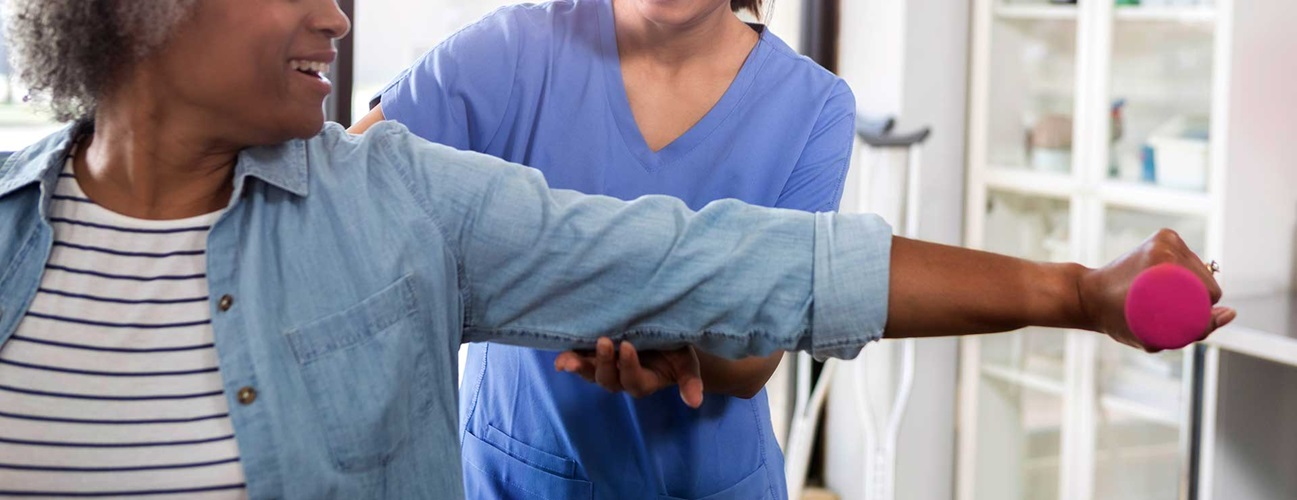
After a stroke, something as simple as reaching for a cup can suddenly become a major accomplishment.
Getting dressed. Brushing your teeth. Using your phone. Buttoning a shirt. Preparing a meal. Typing on a computer.
We use our arms and hands for so many things without thinking about them, until suddenly those movements aren’t automatic anymore.
Arm weakness after stroke is a common challenge for survivors and can range from mild difficulty controlling the hand to significant weakness affecting the shoulder, elbow, wrist and fingers.
And it isn’t always just about strength. Stroke can also affect coordination, sensation, muscle tone and your ability to control specific movements.
For many survivors, that can be incredibly frustrating.
The good news is that arm and hand rehabilitation after stroke can provide opportunities to work on movement and function. But just like everything else in stroke recovery, progress looks different for everyone.
This guide explains why arm weakness happens, what arm recovery after stroke may look like, common rehabilitation approaches and ways to safely incorporate your affected arm into everyday life.
Important: This article is for educational purposes and isn’t a substitute for medical advice or individualized rehabilitation. Talk with your doctor, physical therapist or occupational therapist before beginning or changing an exercise program.
Why Does a Stroke Cause Arm Weakness?
A stroke can damage areas of the brain responsible for sending and coordinating movement signals to the muscles.
When those pathways are affected, your brain may have difficulty controlling movements on the opposite side of your body.
For example, a stroke affecting the left side of the brain may cause weakness or other movement problems on the right side of the body.
But arm weakness after stroke can involve much more than simply having less strength.
You may also experience:
- Reduced coordination
- Muscle stiffness
- Spasticity
- Changes in sensation
- Difficulty controlling individual fingers
- Slow or inaccurate movements
- Difficulty reaching or grasping
- Problems releasing objects
- Reduced awareness of the affected side
You might be able to move your arm but have trouble making it do exactly what you want it to do.
That distinction matters.
How Can Arm Weakness Affect Daily Life After Stroke?
This is where arm and hand weakness can become especially frustrating.
Your arm and hand are involved in hundreds of everyday tasks.
After stroke, you may struggle to:
- Hold a cup
- Use your phone
- Brush your teeth
- Get dressed
- Prepare meals
- Write
- Open containers
- Pick up small objects
- Carry things
- Use a computer
- Manage buttons or zippers
These aren’t just “exercises.” They’re pieces of independence.
And losing the ability to do things you’ve done automatically for years can take an emotional toll too.
That’s why stroke arm rehabilitation often focuses not only on movement and strength, but also on helping survivors use the affected arm during meaningful everyday activities.
What Does Arm Recovery After Stroke Look Like?
This is one of those questions everyone wants an answer to:
How much movement will I get back?
Unfortunately, there isn’t one answer.
Arm recovery after stroke is highly individual.
Some survivors regain useful movement relatively quickly. Others require much longer periods of rehabilitation. Some continue to experience significant arm or hand limitations.
Early progress can also be incredibly subtle.
Maybe you can move your shoulder a little more.
Bend your elbow.
Move a finger.
Open your hand slightly.
Reach a little farther.
Those changes may not feel huge when you’re focused on everything you still want to do, but they can represent meaningful progress.
Factors that may influence recovery include:
- The location and severity of the stroke
- The amount of movement remaining after stroke
- Overall health
- Rehabilitation access
- Consistency with therapy
- Cognitive and communication abilities
- Other medical conditions
There is no universal stroke arm recovery timeline.
And one survivor’s timeline tells you very little about what yours will look like.
Physical and Occupational Therapy for Arm Weakness After Stroke
Physical therapists and occupational therapists can play different but complementary roles in arm rehabilitation after stroke. A physical therapist may work on movement, strength, posture, balance and coordination. An occupational therapist often focuses more specifically on helping you use your arm and hand during everyday activities.
Depending on your abilities and goals, rehabilitation may include:
- Guided movement exercises
- Strengthening activities
- Reaching practice
- Grasp-and-release exercises
- Coordination tasks
- Functional activities
- Sensory exercises
- Strategies for managing muscle stiffness or spasticity
Your rehabilitation program should change as your abilities and goals change.
You can also read our guide to stroke recovery exercises for broader rehabilitation context.
Range of Motion Exercises After Stroke
When an arm is weak or difficult to control, maintaining joint movement can be important.
A rehabilitation professional may recommend range of motion exercises for the affected arm involving the:
- Shoulder
- Elbow
- Wrist
- Fingers
These may include slowly bending and straightening the elbow or gently moving the wrist through a comfortable range.
But don’t force the movement.
The shoulder can be particularly vulnerable after stroke. Caregivers should also avoid pulling on the affected arm when helping someone stand, walk or transfer.
A physical or occupational therapist can demonstrate safe movements and handling techniques.
Reaching Exercises After Stroke
Reaching is something most of us never think about until it becomes difficult.
Reaching exercises after stroke may help survivors practice moving the affected arm toward a useful target.
A therapist might have you reach toward a lightweight object positioned within a comfortable distance. As your control improves, the object may be moved to different positions.
The goal isn’t to move as quickly as possible.
Slow, controlled movement may help you focus on accuracy and coordination.
Hand Weakness After Stroke: Grasping and Releasing
For some survivors, the hand can be one of the most frustrating parts of recovery.
You may be able to close your fingers around something but struggle to let it go.
Or you may have difficulty gripping something in the first place.
Hand exercises after stroke may involve practicing grasping and releasing safe objects with different shapes, sizes or textures.
Whenever possible, therapy may also incorporate real objects.
Instead of grasping something simply because it’s an exercise, you might practice holding a cup, picking up a lightweight household item or moving an object from one place to another.
That can make rehabilitation feel more connected to real life.
Strengthening the Affected Arm After Stroke
Arm strengthening exercises after stroke may be appropriate for some survivors, but the type and intensity should be individualized.
More resistance isn’t automatically better.
Using resistance that’s too difficult may cause you to compensate with other muscles, reinforce poor movement patterns or put unnecessary stress on your joints.
Depending on your abilities, a therapist may recommend body-weight movements, light resistance or other equipment.
The goal isn’t simply to make the arm stronger.
It’s to make that strength useful.
Why Repetition Matters in Stroke Arm Rehabilitation
You hear the word “repetition” a lot in stroke rehabilitation.
There’s a reason for that.
The brain and body need opportunities to practice movements repeatedly. Rehabilitation often focuses on task-specific practice, meaning you’re practicing movements connected to something you actually want or need to do.
If your goal is getting dressed more independently, therapy might involve reaching, pulling, gripping and positioning your arm.
If you want to return to cooking, you may practice safe reaching, grasping or stabilizing objects.
If you want to use a computer again, your goals may involve finer hand and finger movements.
That’s one of the things I think is so important about stroke rehabilitation: the goal isn’t simply to get better at therapy.
It’s to get better at living your life.
What Is Constraint-Induced Movement Therapy?
Constraint-induced movement therapy, or CIMT, is one rehabilitation approach that may be appropriate for some stroke survivors who have sufficient movement in the affected arm.
The general idea is to increase use of the weaker arm while limiting reliance on the stronger arm during certain activities.
But CIMT isn’t appropriate for everyone.
A rehabilitation professional can determine whether you have enough movement and control for this type of therapy and whether it makes sense for your individual goals.
Spasticity and Arm Stiffness After Stroke
Some survivors develop spasticity after stroke, which can cause increased muscle tightness or stiffness.
The arm may feel tight, and certain joints can become difficult to move.
Spasticity can interfere with:
- Reaching
- Grasping
- Getting dressed
- Personal hygiene
- Positioning the arm
- Everyday activities
Treatment depends on your individual situation and may involve positioning, stretching, movement practice, medication, injections or other medical approaches.
Don’t force a stiff or painful arm into position.
Talk with your rehabilitation or medical team about safe ways to manage arm spasticity after stroke and protect your joints.
Using Your Affected Arm During Everyday Activities
Rehabilitation doesn’t always have to look like formal exercise.
When it’s safe and appropriate for your abilities, everyday life can provide opportunities to practice using your affected arm.
You might use it to:
- Stabilize an object
- Reach toward a safe item
- Hold a lightweight object
- Help with dressing
- Place objects on a table
- Participate in meal preparation
- Perform simple grooming tasks
That doesn’t mean forcing your affected arm to do something it isn’t ready to do.
The goal is to find safe, meaningful opportunities to incorporate it into your day based on guidance from your rehabilitation team.
How Caregivers Can Help With Arm Recovery
Caregivers can be incredibly helpful during stroke recovery.
But sometimes helping too much can unintentionally take away opportunities for a survivor to practice.
When it’s safe, give the survivor enough time to try.
It may take longer. It may be frustrating to watch. But doing part of a task independently can matter.
Caregivers should also avoid pulling on the affected arm, particularly during transfers or walking. Follow the handling techniques recommended by the rehabilitation team.
And encouragement usually goes a lot further than pressure.
Stroke recovery can be frustrating enough without feeling like someone is disappointed because you can’t make your body do something yet.
How Long Does Arm Recovery Take After a Stroke?
There is no fixed arm recovery timeline after stroke.
Some survivors experience noticeable changes during the early stages of recovery. Others continue making improvements over a longer period.
Recovery can also happen unevenly.
You might regain shoulder or elbow movement before fine finger control. You may see improvement for a while and then feel like you’ve hit a plateau.
Try not to judge your progress by someone else’s recovery.
We see this all the time in the Stroke Sisters community. Two women can have seemingly similar strokes and completely different challenges, timelines and outcomes.
Your recovery belongs to you.
Don’t Overlook the Small Wins
One of the hardest things about stroke recovery is that we naturally focus on what we still can’t do.
But progress doesn’t always arrive as a huge breakthrough.
Sometimes it’s:
- Moving one finger.
- Reaching a little farther.
- Holding onto something for a few seconds longer.
- Using your affected hand to stabilize an object.
- Doing one part of getting dressed yourself.
Those small wins matter.
They may represent your brain and body doing something today that they couldn’t do before.
Give yourself credit for that.
When Should You Seek Medical Attention?
New or suddenly worsening arm weakness should always be taken seriously.
Sudden arm weakness, facial drooping, speech difficulty, vision changes, severe dizziness or other new neurological symptoms may indicate another stroke and require emergency medical attention.
Don’t assume new weakness is simply part of your original stroke recovery.
You should also discuss persistent shoulder pain, swelling, significant stiffness or changes in arm function with your healthcare provider.
Frequently Asked Questions About Arm Weakness After Stroke
Can arm strength return after a stroke?
Many stroke survivors experience some improvement in arm movement or strength, but the amount of recovery varies considerably.
Rehabilitation may help survivors work toward improved movement and functional use of the affected arm.
What are the best arm exercises after a stroke?
There isn’t one set of arm exercises after stroke that’s appropriate for everyone.
Depending on your abilities, rehabilitation may include range of motion exercises, reaching activities, grasp-and-release practice, strengthening, coordination exercises and functional activities.
A physical or occupational therapist can recommend exercises appropriate for you.
How often should I exercise my affected arm?
There is no universal schedule.
Exercise frequency should take your medical condition, fatigue, rehabilitation plan and current abilities into account. Your physical or occupational therapist can provide individualized guidance.
Should I force my weak arm to move?
No.
Movement should be controlled and appropriate for your abilities. Forcing a stiff or painful joint can cause injury, particularly in the shoulder.
Ask your rehabilitation team to show you safe techniques.
Why won’t my hand open after a stroke?
Stroke can affect muscle control and coordination, and some survivors also experience spasticity or muscle stiffness.
Difficulty opening the hand should be evaluated by a rehabilitation professional who can determine what may be contributing to the problem and recommend appropriate treatment or exercises.
Can I use my affected arm during everyday activities?
If it’s safe and appropriate for your current abilities, incorporating your affected arm into everyday activities can provide useful practice.
The specific activities should match your rehabilitation goals and your therapist’s recommendations.
Can arm function continue improving months after a stroke?
Stroke recovery doesn’t follow one universal timeline. Some survivors continue working on arm and hand function well beyond the early stages of recovery.
Your rehabilitation team can assess your current abilities and help determine appropriate goals and treatment options.
Arm Recovery Is About More Than Strength
When we talk about arm weakness after stroke, it’s easy to focus entirely on how strong the arm is.
But that’s only one piece of the puzzle.
Recovery may also involve coordination, sensation, flexibility, control, confidence and learning how to use the affected arm in everyday life.
And progress doesn’t always happen on the timeline we want it to.
If you’re working on arm and hand recovery after stroke, try to notice the small improvements along the way instead of measuring yourself against someone else’s recovery.
One finger moving is progress.
Reaching a little farther is progress.
Using your affected arm during one small part of your day is progress.
Keep working with your rehabilitation team, keep your goals connected to the life you want to live and don’t discount the small wins.
They count.
For more support beyond physical rehabilitation, visit Stroke Sisters and explore our stroke recovery resources.
Medical Disclaimer: This article is for educational and informational purposes only and is not intended to provide medical advice, diagnosis or treatment. Stroke recovery varies significantly from person to person. Always consult your physician, physical therapist, occupational therapist or another qualified healthcare professional before beginning or changing an exercise or rehabilitation program.