_1765581354215-B3gV1V2H.png)
Paralysis After Stroke: The Fear of Not Knowing If You’ll Ever Move Again
By Angie Read, Founder of Stroke Sisters
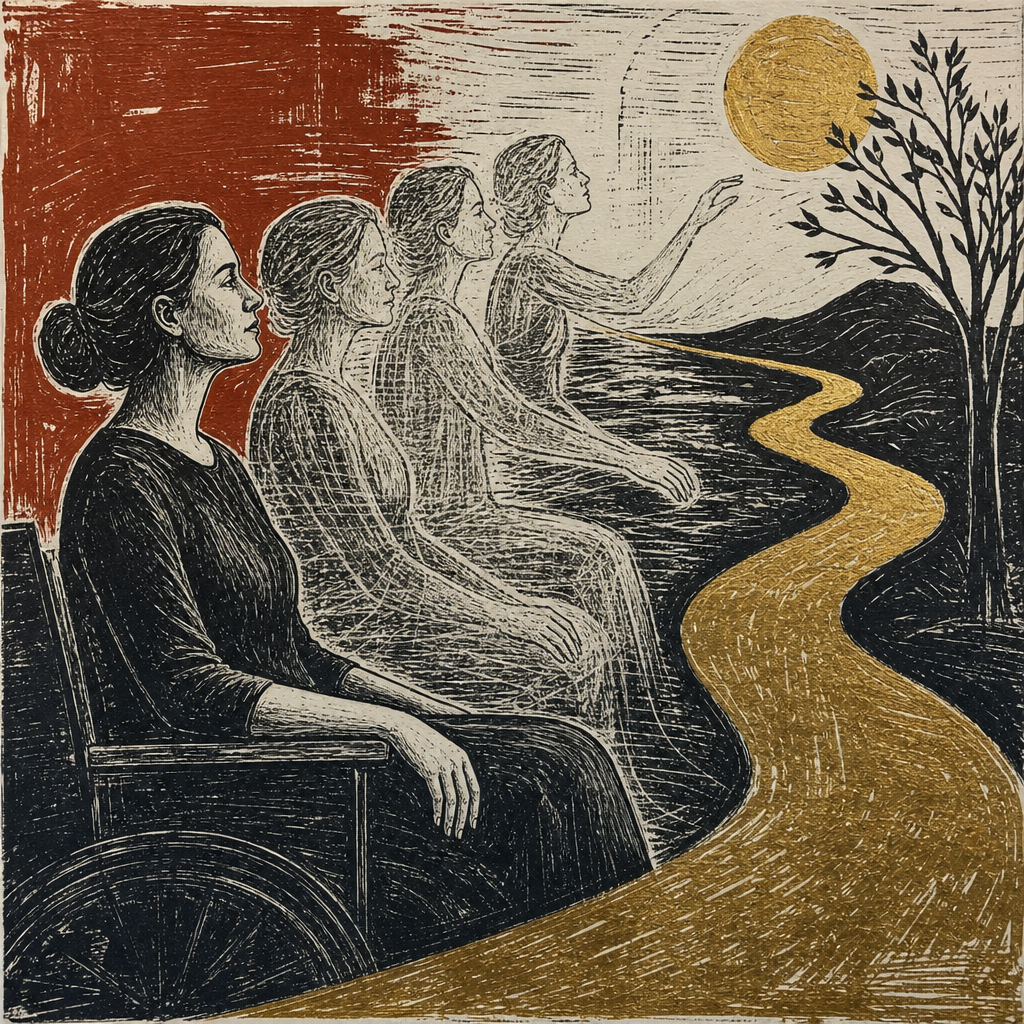
There are moments after stroke that are almost impossible to explain to someone who has not lived them.
You tell your arm to move. Nothing happens. You try again. Move. Still nothing.
Maybe it is your hand, your leg or an entire side. Something you have done automatically your whole life suddenly does not work. Then comes a terrifying question: Am I going to be like this forever?
Stroke Sister Megan Thomas asked us to talk about this part—not only exercises and terminology, but the horror of paralysis and not knowing whether it will improve.
“It’s unexplainably horrendous to not know if I’ll forever live like this.”
So let’s talk honestly.
What Causes Paralysis After a Stroke?
The brain controls movement by sending signals to muscles. When stroke damages a movement area or signal pathway, that communication can be disrupted.
Hemiparesis means weakness on one side. Hemiplegia means paralysis on one side. Because each brain hemisphere generally controls the opposite side of the body, a left-brain stroke commonly affects the right body and vice versa.
Severity varies enormously—from a weak hand to inability to move an entire side.
The First Days Can Be Terrifying
Imagine waking in a hospital bed unable to move. Doctors are testing, family looks frightened and nobody can answer the question you desperately want answered: When will this come back?
Doctors and therapists can assess the stroke and monitor recovery, but they cannot look at you on Day 3 and say exactly what you will do six months later. That uncertainty is brutal.
“Will I Always Be Like This?”
The most accurate answer is that nobody can promise how much movement you will regain. Recovery depends on stroke location, tissue affected, severity, other conditions, neurological recovery, access to rehabilitation and which functions were affected.
But what you can do today does not necessarily reveal everything you will do later. NINDS explains that the brain can rewire circuits, while the American Stroke Association emphasizes that recovery has no set endpoint. Improvement can continue for months or years.
What Is Neuroplasticity?
Neuroplasticity is the brain’s ability to change and reorganize. After one pathway is damaged, the brain may strengthen other connections or recruit different areas to help perform a function.
It cannot magically undo every injury and should never be used to promise full recovery. It is one reason rehabilitation and repetition matter: move, reach, stand, step, grasp, release—again and again. The repetition can be exhausting, but it has a purpose.
The Mental Battle of Physical Paralysis
Paralysis is not only physical. Someone may need to dress you, help you shower, move your leg into bed or cut your food. It can feel humiliating, infuriating and terrifying.
You may cry in therapy, get angry or refuse to celebrate moving one finger because you want your whole arm back. That is understandable. Stroke culture sometimes pressures survivors to celebrate every win and stay positive, but there are days when this is awful. You are allowed to say that.
You Don’t Have to Call It a Blessing
You do not have to be grateful for your stroke, say everything happens for a reason or turn paralysis into an inspirational story while learning how to get out of bed.
Something terrible happened. You can acknowledge that and still work toward recovery. Those things are not opposites.
What If Therapy Feels Pointless?
Some days you repeat a movement and see nothing happen. Rehabilitation is not based only on dramatic visible improvement.
Physical therapy may address sitting balance, standing, transfers, walking, strength, coordination and range of motion. Occupational therapy may address arm and hand function, dressing, bathing, toileting, eating and cooking.
Sometimes progress means walking. Sometimes it means standing for 30 seconds, moving one finger or learning a different way to complete a task. All can matter.
Your Affected Side Still Needs Attention
Follow your rehabilitation team’s instructions for positioning, movement and safety. Do not aggressively pull, stretch or exercise a paralyzed limb because someone online did it.
Shoulder problems, spasticity, falls and other complications can occur. Your plan should match your abilities.
Don’t Compare Your Recovery
You see someone online walking three months after stroke while you still use a wheelchair. Your mind asks, “Why her and not me?” Stroke does not follow a fairness system. Two people can have strokes on the same day and have completely different injuries.
Someone else’s timeline is not evidence about yours.
What If My Hand Isn’t Coming Back?
The hand can be especially frustrating. Shoulder or arm movement may return before fine finger control, leaving buttons, typing, cooking, writing and makeup difficult.
Work with your occupational therapist on goals that matter to you. Read Hand Exercises After Stroke for safe home-practice guidance.
What If I Can’t Walk?
The first goal may be sitting independently, then standing, transferring, taking one step and then another.
Walkers, canes, braces and wheelchairs are not evidence that recovery failed. They are tools for independence. If a wheelchair gets you out of your bedroom or a walker gets you safely to the bathroom, that is independence.
Read Walking After Stroke.
The Fear of a “New Normal”
You do not have to decide in the first weeks or months that everything is permanent. At the same time, recovery may eventually involve restoration and adaptation: regaining what you can and finding ways to live fully with what remains.
Acceptance does not have to mean giving up. It can mean: This is where I am today. What can I do from here?
A Life With Paralysis Still Has Value
For some survivors, paralysis feels like the worst imaginable outcome. But a life with paralysis is not automatically the worst possible life. Survivors with significant disabilities live meaningful, funny, connected, productive and joyful lives.
That does not make paralysis easy or erase grief. It means your life still has value even if your body does not recover exactly as you desperately want.
Things to Tell Yourself on the Worst Days
- I don’t know what my recovery will look like yet.
- What I can do today is not necessarily forever.
- I only have to deal with today today.
- Using help does not mean I have given up.
- A wheelchair is a tool, not a verdict.
- Progress can be tiny and still be progress.
- I can hate this and still keep going.
- My worth is not determined by how well my body moves.
- I do not have to know the ending yet.
Let Yourself Grieve
Paralysis can bring grief for your body, independence, career, hobbies, sexuality, parenting, movement and the person you thought you would be.
Tell someone if you are struggling. Post-stroke depression and anxiety are common. Read Mental Health After Stroke and Post-Stroke Anxiety in Women. Mental health treatment is part of recovery.
Keep Your Goals Personal
Your goal may not be “walk independently.” It may be transferring into your daughter’s car, holding a grandchild, applying makeup, cooking, using your affected hand to steady a bowl or walking at a wedding.
Tell therapists what matters. Rehabilitation should help you participate in your life, not merely check boxes on an assessment.
Recovery Can Continue
Recovery often happens fastest earlier, but there is no universal date when the brain closes the recovery department. Improvement can continue for months or years, even after formal rehabilitation ends.
That does not guarantee every lost function will return. It means time alone is not a reason to assume improvement is impossible.
A Final Thought
If you are reading from a wheelchair, if your arm still will not move, if someone dressed you this morning or you cried after therapy, I will not promise that everything will be okay. I do not know exactly what your recovery will look like. Neither does anyone else.
What I can tell you is this: today is not necessarily forever. Keep working with your team. Ask questions. Set goals that matter. Use tools that give independence. Celebrate when you can, be angry when you need to and rest when your body has had enough.
Stroke changed your body and may have changed your life. Your story is not finished simply because you do not know how the next chapter turns out.
Frequently Asked Questions About Paralysis After Stroke
Can paralysis after stroke improve?
Yes, movement can improve, although amount and timing vary greatly. Rehabilitation and repetitive practice can help, and gains may continue for months or years.
Does paralysis after stroke always become permanent?
No. Early paralysis does not automatically mean permanent paralysis, but nobody can predict with certainty how much movement one survivor will regain.
What’s the difference between hemiplegia and hemiparesis?
Hemiplegia generally means paralysis on one side of the body. Hemiparesis means weakness on one side.
How long does it take to regain movement?
There is no universal timeline. Recovery depends on stroke location and severity, affected functions and many individual factors.
Can movement improve years after stroke?
Improvement can occur beyond early recovery. Stroke recovery has no set endpoint, although this does not guarantee every function will return.
Should I exercise a paralyzed arm or leg at home?
Follow exercises recommended by rehabilitation professionals. A paralyzed or severely weak limb may require specific positioning or assisted techniques to prevent injury.
Will I ever walk again?
No online resource can accurately answer that for an individual. Your rehabilitation team can assess current abilities and help establish realistic mobility goals.
What if I never completely recover?
Rehabilitation also teaches adaptations, equipment and strategies that increase independence. Needing adaptations does not mean recovery failed.
More From Stroke Sisters
Trusted Resources and Further Reading
Federal information on recovery, neuroplasticity and rehabilitation.
Definitions and information about weakness and paralysis after stroke.
Guidance about individualized rehabilitation and recovery.
Information about rehabilitation goals and care.
Clinical recommendations for motor recovery and physical effects.
Medical Disclaimer: This article is for educational and supportive purposes only and is not a substitute for professional medical advice, diagnosis, prognosis or treatment. Stroke recovery varies considerably. Work with qualified rehabilitation and medical professionals on an individual plan. For sudden new neurological symptoms, call 911 immediately, even if symptoms improve, and do not drive yourself.